
An AI Intervention
Okay, so I am addicted. Do I have to claim that I am powerless and that a power greater than myself is going to restore me to sanity? Yeah, no. I’m not into that kind of language. However, for the past 10 days, I have been addicted to AI and just can’t stop.
I have been an author for over 20 years, mostly writing books about self-help or psychological stories that emphasize self-care. I thought my writing skills were pretty good, but I wondered if AI had something to say about that.
I know about technical writing, but a few years ago I wanted to try my hand at fantasy writing. I had been listening to audiobooks for years and wanted to see what I could come up with—then inspiration hit while watching YouTube—seeing prehistoric man battling mastodons—and—BONG—inspiration hit!
Three books popped out in no time, and after a few years of creating stories with my character, I started missing them. I learned to create rock-solid characters, throw them into a situation, and let them bring it to life. Since I was the main character—did that mean I missed myself, too? An interesting thought. But no, I wanted to hang out with my caveman friends, and yes, that’s what I wrote about—I put myself into the position of a person who magically transports back to the caveman era and has to learn to survive.
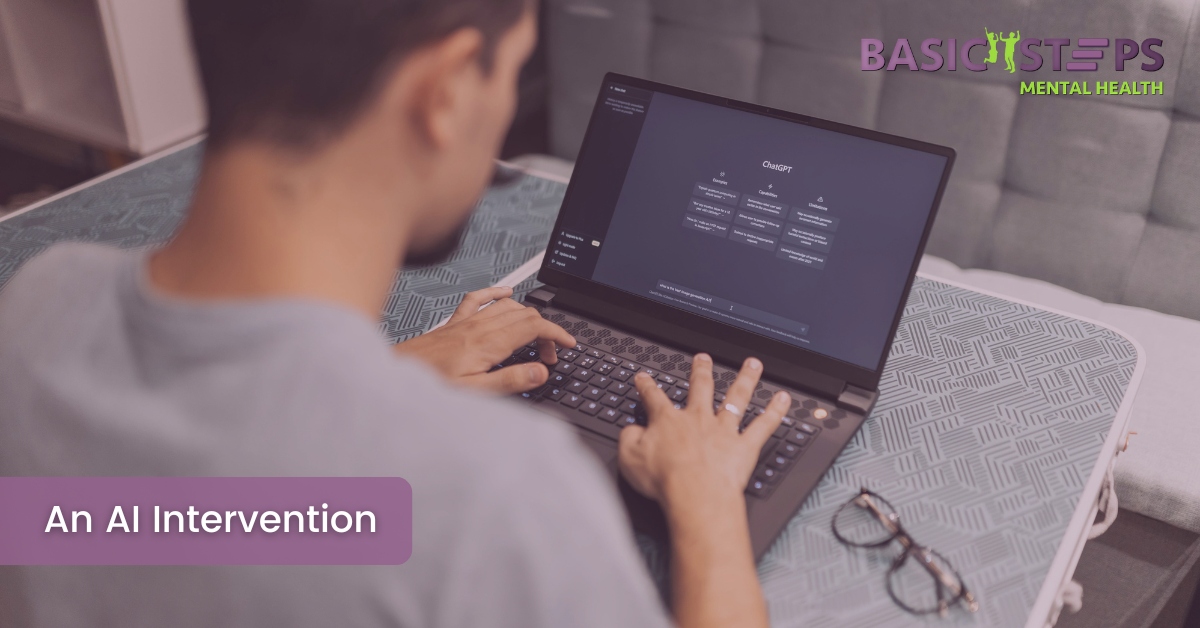
Here’s where the AI comes in. So again, missing my character, I decided to re-read the books and was shocked! My grammar was horrible, some of the stories didn’t make any sense, and I kept wondering where my head was at. I had to re-edit them and decided to give ChatGPT a try. When I tested it on a small section of the book—OH MY GOD!—I had a religious experience! This was like a gift from God! The AI really got me. It was like a kindred spirit! My private tutor (AI) knew proper grammar and sequencing of a sentence, and provided a few words to the rambling sentences I grappled with. I wish I had a teacher like it when I studied in school. Bar none, this has been the greatest tutor I’ve ever had!
Now, is AI perfect? Not really. It is great, maybe 90% of the time. It didn’t understand the overall picture and some of the innuendos the story was telling, but at those times, I had to improvise. The more I’ve used it, the better I’ve become—if I can toot my own horn, so to speak.
Unfortunately, old habits returned. I used to be an addict, and back then, I never knew when to stop. With AI, a new addiction has been full bore.
My trust issues have flared. For some reason, I think that AI is going to go away, and I have a codependent relationship with it right now. In fact, for the last three days, I’ve edited 100 pages! One hundred! There isn’t a time that I don’t think of it. At every moment, I have been squeezing in time to write—between counseling sessions, when I wake up, and just before sleep. March Madness has been put on hold and replaced by AI. YouTube is adding to my addiction because replays of my favorite teams playing only take 20 minutes—not three hours. Thus, I have 2½ hours for AI.
I grew up across the street from Ray Bradbury, the science fiction writer—“Fahrenheit 451,” “The Martian Chronicles,” “The Illustrated Man”—and always wanted to be like him. Ray told me his doctor needed him to exercise more, so he got a membership at a health club and walked his way through tennis matches a few times a week. That was his exercise. For the last week, I have forced myself to hike. This is not like me. I’ve lived for my hikes, but AI topped this to the nth degree! If only I could walk and edit at the same time—I’d probably be so happy I’d burst! This is now a warning sign.
If your addiction stops you from work, recreation, or your normal social functioning—you have a problem. I have to admit I have avoided interacting with family and friends.
I think I need an intervention—though I’ve rarely seen them fully work. Mostly, during interventions, I have to play cop and set boundaries when people try to vent frustration. I need to remind them that their loved one is sick (injured) and not in their right mind. How do I know this? Because I was that sick person and had an addiction that led me to the street. My intervention style is to have the support people first write out everything that frustrates them, next have them rip it up, and then show each person how to talk to their loved one from their heart.
I hate to be the bearer of bad news, but we cannot force people to heal.
This has been one of the most frustrating things we therapists have to deal with—we have no power to change others. And what I’ve learned is that people who need treatment the most fight against it. By law, we have to allow people to make their own decisions, and this refers also to treatment. But if the person is a danger to themselves or others, or they are gravely disabled, then we must take action. Though if a person is an absolute mess but still able to feed themselves, then our hands are tied. Until the person is ready to change, they will enter treatment.
Put yourself in their place. They are stuck in a habit that is their normal. Who cares if they lose their job, their friends, their home, and their dignity? Regardless, this is their normal, and who are we to force them to change?
The above describes how I was. I thought people who tried to get me to sober up were enemies. Until I reached my bottom, I came to my senses.
It wasn’t what another person did or said. I did it because I did it.
Let’s face it—having a group talk at someone can be overwhelming, but it does have some advantages. If handled properly, heart-centered communication can be taught. This, along with perception checking and asking open-ended questions, can help people communicate, listen, stay neutral, and simply talk—one person to another—which, to me, is where the real healing takes place.
When a person is ready to change, then ready, set, go. Don’t wait—get the person into treatment at that moment. There seems to be a brief window for getting someone into therapy once they decide. Strike when the iron is hot. When they do go, praise them, support them, and avoid giving negative opinions about the approach. The mere fact that they are in treatment is all you need to focus on.
If they don’t want to attend treatment—that is their decision, and you need to stand by it. Let it go. If you are supporting them financially, you may want to reconsider at this time. You may be enabling them—meaning that you are supporting them in their weakness. I ask parents to stop paying that check because it is fostering dependence on you, and our job as parents is to prepare our children to be adults. When I hit my bottom, I got motivated. The amount of energy I spent on obtaining drugs, I shifted into recovery—and it worked!
Treatment is a process. Our job as a facility is to educate and provide a practical experience—meaning we train our participants to be counselors and practice on one another. The belief is that when you teach, you learn. Plus, having people comfortable using professional tools helps them use these tools ongoing—for long-term success. Yes, our program is different than the rest.
I just got that look. A staff person thought I was editing my book. “Hey, it’s an article, give me a break,” I said. Their reply—“Yeah, sure it is.”
You’re probably wondering if I edited this article with AI. Well, wouldn’t you like to know. I think I will keep this a mystery because of my old habits. Oh, I was sneaky. I used to call this part of my personality “Stealth.” When I was active in my addiction, I was so paranoid. I did tons of things behind the scenes to shield my use from loved ones who loved to lecture me. So I hid.
I remember graduating with my doctorate and feeling I was going to heal the world. What if the world didn’t want to heal? That was the one problem that came up every once in a while. Personally, I changed because I was sick and tired of being sick and tired. Nobody was going to tell me what to do, even when I knew they were right. In my interventions, I ask the person if they like their life as it is and if they have considered changing. I always want to ally with the person everyone is against, because that was me. If they don’t want to change, then all I can do is plant seeds and hope that when they decide to change, they will remember me. That’s when I ask the family to back off.
If a person doesn’t want to change, the interesting fact is that change is constant. Here is where my spiritual beliefs kick in. Events happen in our lives for a reason. If we don’t take any action, situations keep returning again and again until we eventually face them. We may be faced with no money, no housing, incarceration, loss of social support, and if you don’t think things can get worse—think again. How low is your bottom?
Do we do nothing? Not at all. I believe if you speak your truth—in a manner that the person can accept—it shows that you care. If you cut off funding and housing, this shows you care enough to help them fend for themselves. Giving a person a fish (so to speak) helps the person for a moment, but keeps them dependent. Teaching a person to fend for themselves will feed them for a lifetime.
One parent told me they helped their son because they didn’t want him to go to jail or be homeless. Sometimes we need to be jailed or live on the street. I was homeless. It helped me put things into perspective and motivated me to change. My first step was becoming sober—even though I loved using.
To conclude: Thanks, AI, for bringing all of this to the surface. And I just thought that you were providing that intense feel-good, as I had in my past.
Sobriety gave me a spiritual awakening. At my lowest, God showed up. I’ve tried to hide this to avoid ridicule. Now I don’t care. I can’t deny that I got strength from my connection with God. In graduate school, they called it “co-creation.” This wasn’t God restoring me to sanity. Co-creation means I need to take the action steps, and God was then by my side.
Here is what I bring to treatment: a strong, clinically based program where each person needs to take their own action steps and create their own recovery. Not mom or dad, not God, but you—working with God. Our program is one of empowerment. At the end of our IOP program, participants create self-counselings where they are both client and therapist. Talk about true empowerment. This is because our program helps people learn how to be a counselor. This approach is unique and was modeled after my graduate school, where we learned the trade by counseling one another.
Compassionate Care is Always Available
There are many more tools and strategies you can use in your pursuit of happiness. Here is where we come in. Contact us at Basic Steps Mental Health and let us support and educate you on this journey back to your loving heart center. Imagine living a heart-centered life, regardless of what is happening externally. We’d love to be of help.
For 25 years, Dr. Scott Alpert, the clinical director of Basic Steps Mental Health, has treated over 7,000 people with mental health and addiction problems, using a Psychological approach that mixes and matches ten of the top approaches used in the industry. We are here virtually and in-person to help you get through this COVID-19 pandemic and many other difficulties you may be experiencing.
May you have good mental health.
Related Posts
Is Boredom a Problem?
We do a fun exercise in our Intensive Outpatient Program called “The Wall.”...

Boosting Your Immunity
After recently traveling and being with a lot of people, it was a different...